Selected work · 2010–2011
(re)ACT
Activated architecture through projected interaction
An interactive artwork exploring the potential of activated architecture.
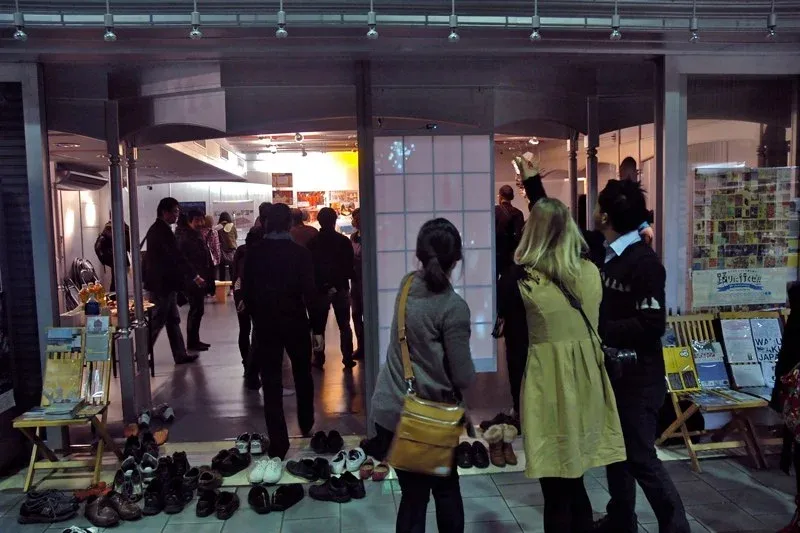
(re)ACT is a responsive architectural surface that engages viewers visually and kinetically. Visitors see themselves projected through a traditional Shoji screen, where their movements generate visual elements featuring the letters “(Re)” and a Chinese character meaning to change, to rebuild, to remake. The symbols network and interact while responding to each viewer’s movement, the work reading the body and writing it back into the screen as projected pattern.
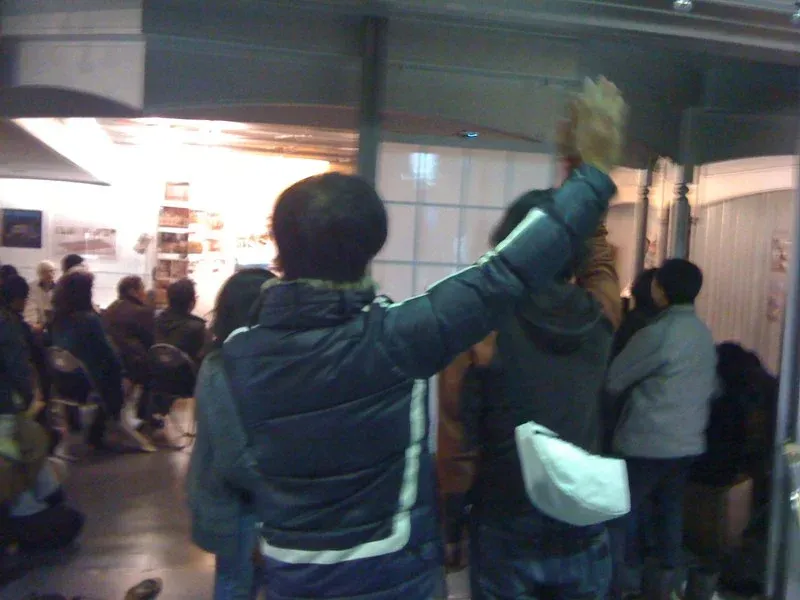
The Shoji screen — a centuries-old translucent rice-paper-and-wood divider with deep architectural history in Japan — was chosen deliberately. Its translucency makes it ideal for rear projection, but more importantly the work stages a juxtaposition of tradition and digital innovation: a familiar quiet object, suddenly responsive.
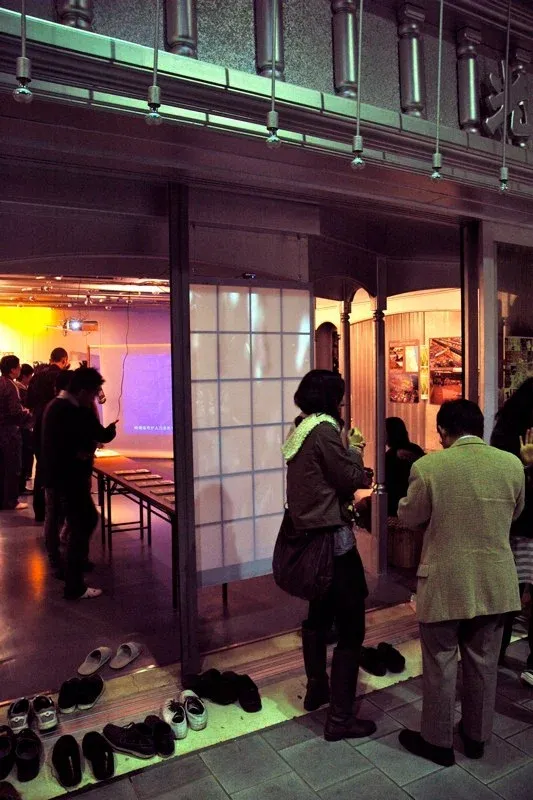
The work was installed at Platform 01 in Beppu, Ōita, Japan as part of Re:, the 2010 GFRY Design Studio exhibition. GFRY Studio is the interdisciplinary research studio at the School of the Art Institute of Chicago where I completed my MFA thesis the same year.