Experiential and Immersive Media
What happens when an architectural surface or object is given the means to respond. The phenomenology of the space changes — and the work of making that change intelligible falls to designers more than to engineers.
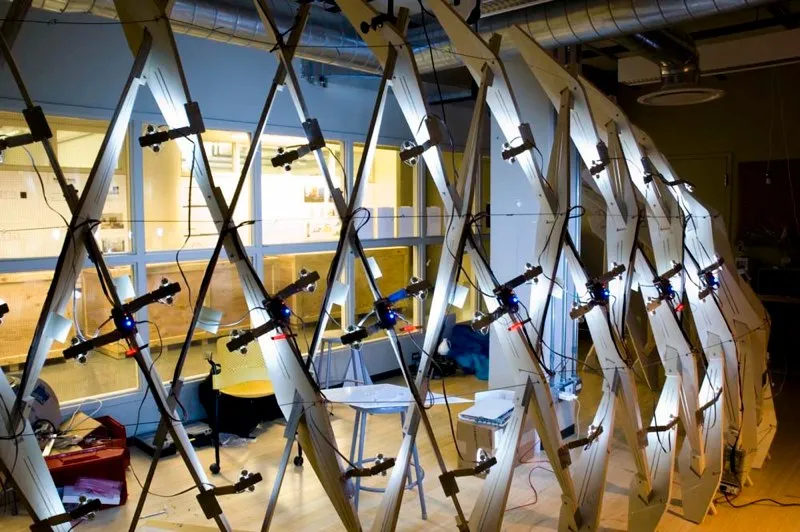
This strand investigates what happens when an architectural surface or object is given the means to respond. The conventional building is a fixed register; it organizes space and accepts use, but the use leaves no trace and the building offers nothing back. An experiential or immersive medium changes that register. The surface watches, the object acknowledges, the room registers presence. The phenomenology of the space changes — not always for the better, but in ways that ask design questions worth taking seriously.
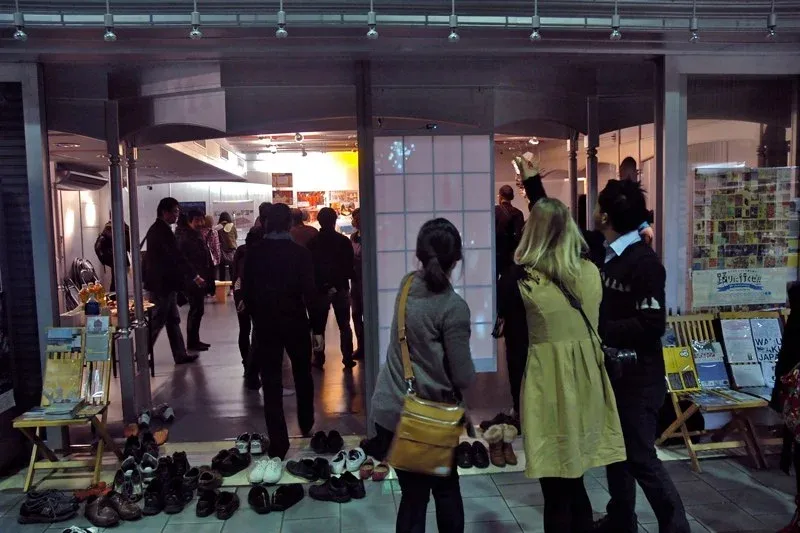
Active Light Cloud, an early installation at the School of the Art Institute of Chicago, used computer-vision tracking to make a ceiling-mounted lighting array aware of the bodies moving beneath it. (re)ACT, installed at Platform 01 in Beppu, Japan, did something similar at the scale of a single Shoji screen — the centuries-old translucent paper-and-wood divider, suddenly registering its viewers and folding their movement back into projected pattern. Bridges, a conceptual proposal for nearly a thousand individually addressed lights placed in the Chicago River bed, asked whether the city itself could become an experiential medium.
What threads through these is a specific position: that responsiveness is not a gimmick to be designed in or out, but a register architecture is increasingly going to occupy whether designers attend to it or not. My research takes the position that this register has its own conventions, its own ethics around attention and surveillance, and its own training requirements — and that the work of making it intelligible falls to designers more than to engineers.